
Generator Gas Line Installation in Houston, TX
After Houston's storm seasons, a standby generator is more than convenience — it's protection. We install the gas line that powers it, properly sized and permitted, so it works the moment you need it.
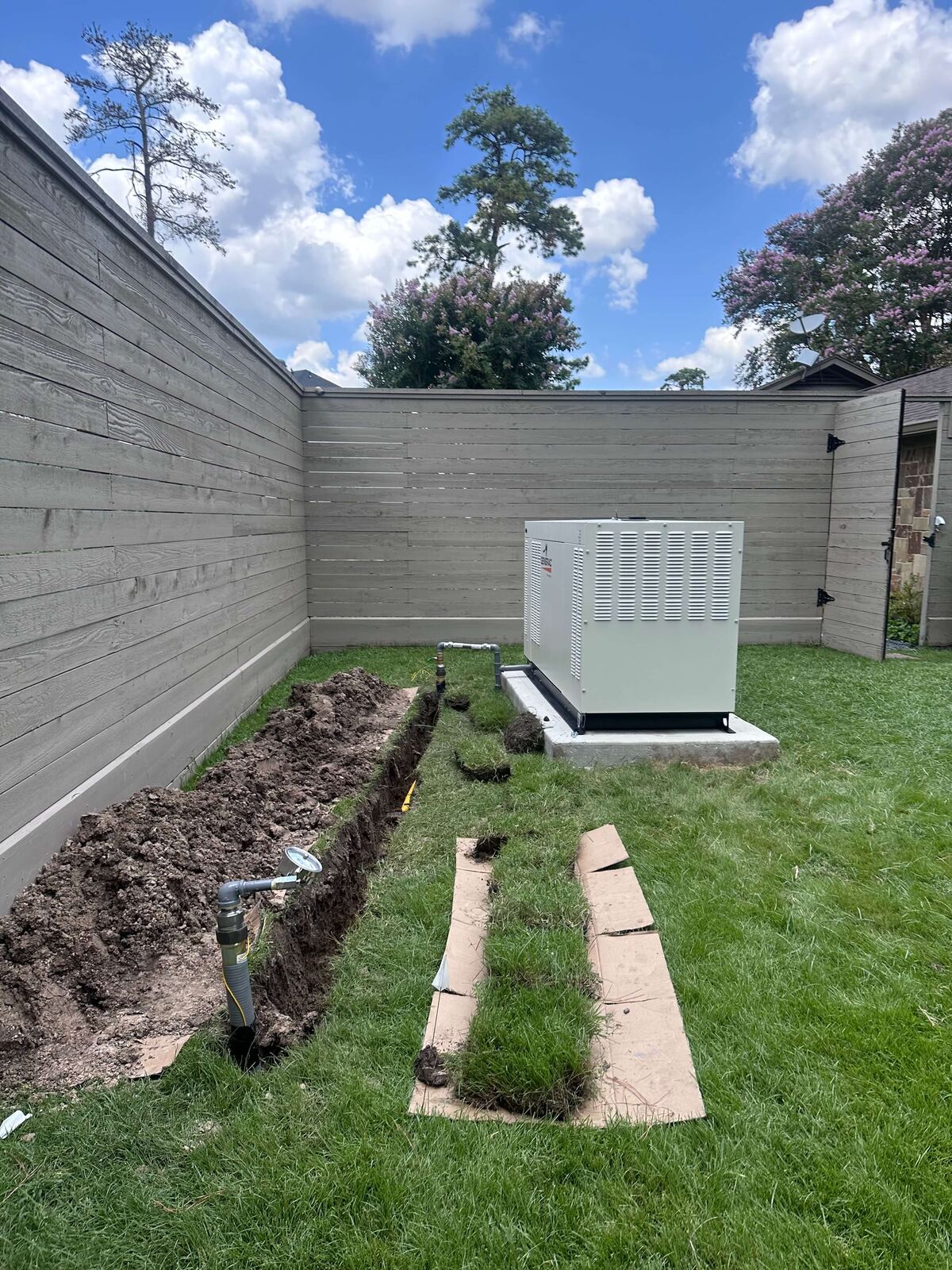
After hurricanes, ice storms, and grid failures, a standby generator is the difference between a stressful week and life-as-usual. The gas line that feeds the generator is the most overlooked part of the install — and the part that determines whether your generator can actually run at full load when you need it.
Sizing the line correctly
A typical whole-home standby generator (20–24 kW) needs roughly 280–400 cubic feet of natural gas per hour at full load. That’s a significant demand — more than most existing gas lines can handle. We calculate:
- Total BTU demand of the generator at full load
- Combined demand of all other gas appliances (water heater, range, dryer, etc.)
- Pressure drop across the run length
- Required pipe size to meet demand without starving other appliances
Then we install the right pipe — typically CSST (corrugated stainless steel tubing) or schedule 40 steel — properly bonded, supported, and protected.
What’s included
- BTU demand and load calculation
- Permit and inspection coordination
- Gas company coordination if meter upgrade is needed
- Pipe routing, sizing, and installation
- Bonding and grounding per current code
- Full pressure test before commissioning
- Coordination with your generator installer
We don’t install the generator itself — that’s an electrician’s job. We make sure the fuel side is done right.
Common Issues We Solve
Gas supply too small for generator
Standby generators need significant gas flow. We size and run the right line for your unit.
Existing meter undersized
Many older Houston homes have meters too small for a generator's BTU demand. We coordinate with the gas utility for upgrades.
Permit and inspection coordination
Generator installs require permits and inspections. We handle scheduling and pass the first time.
Routing through tight spaces
Gas lines often need to run around landscaping, foundations, and existing utilities. We plan the route carefully.
Coordinating with generator installer
Most generator companies don't handle gas plumbing. We work alongside your installer for a turnkey project.
Transfer switch and electrical coordination
We focus on the gas side; we coordinate with your electrician on the electrical side.
Our Process
- 1
Site visit and load calculation
We visit, measure, and calculate gas demand for your generator plus existing appliances.
- 2
Permit and meter coordination
We pull permits and coordinate with the gas company if the meter needs upgrading.
- 3
Pipe routing and install
We run the right-sized pipe — typically CSST or schedule 40 steel — to the generator location.
- 4
Pressure test and inspection
Every gas line is pressure tested before being put in service. We coordinate the city inspection.
- 5
Commission with generator
We work with your generator installer to commission the system and verify proper operation.
Why Choose Us for Generator Gas Lines
Licensed gas plumber
Texas requires a licensed master plumber for gas work. We're licensed, insured, and inspected.
Coordinated with generator installer
We work alongside your electrician/generator company so the project moves smoothly.
Code-compliant the first time
Pressure tested, properly sized, properly routed. Inspections pass on the first visit.
Generator Gas Lines — Common Questions
Why do I need a licensed plumber for generator gas lines?
In Texas, gas piping work must be performed by a licensed master plumber and inspected by the local jurisdiction. Generator companies handle the electrical side; the gas side is plumbing.
Will my existing gas meter handle a generator?
Sometimes yes, sometimes no. A typical 22kW standby generator demands around 350 cubic feet per hour of natural gas. Older meters often need upgrading — we calculate total demand and coordinate any meter changes with the gas company.
How long does generator gas line installation take?
Most installs are completed in 1–2 days, including pressure test and inspection. Meter upgrades from the gas company can add time depending on their schedule.
Generator Gas Lines Throughout the Houston Metro
We provide generator gas lines service across Houston and surrounding communities. Tap your city for local details.
Related Services
Gas Line Installation
New gas lines for ranges, dryers, outdoor kitchens, fire pits, and pool heaters.
Learn MoreGas Line Repair
Pressure testing, leak detection, and certified repair of damaged gas lines.
Learn MoreTankless Water Heaters
Endless hot water with high-efficiency tankless installation, diagnostics, and maintenance.
Learn MoreSchedule Your Generator Gas Lines
Get a written estimate, transparent pricing, and a 1-year labor warranty from licensed Houston plumbers.