
Water Heaters
Tankless vs. Tank Water Heaters: Which Is Right for Your Home?
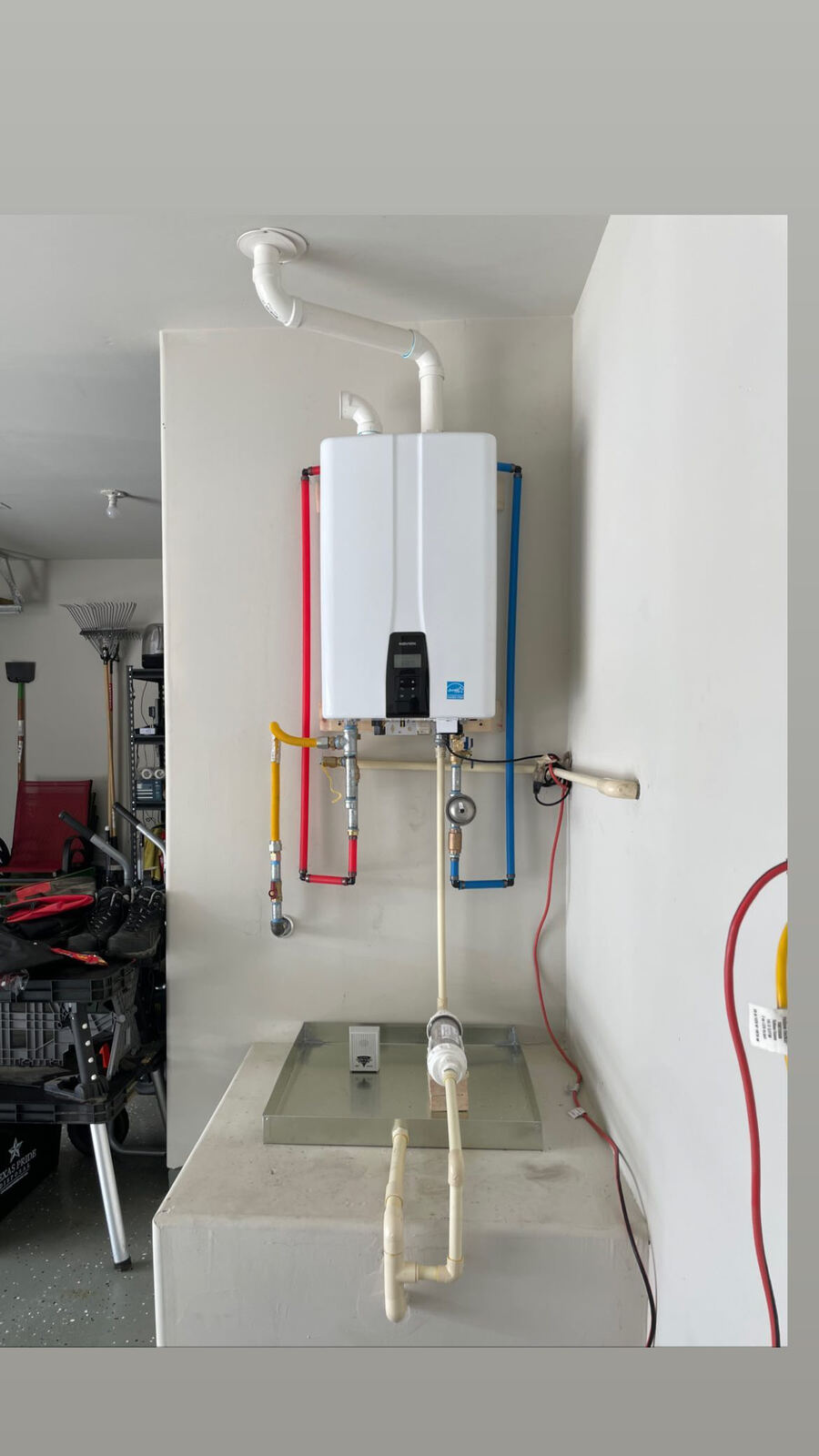
If you’re replacing a water heater, you’ve probably heard the tankless pitch: endless hot water, lower bills, lasts twice as long. You’ve also probably heard the counter-pitch: tank water heaters are simpler, cheaper, and proven. Both have a point. Here’s an honest comparison for a typical Houston home.
The 30-second version
Tank water heater is usually right when: you want the lowest upfront cost, your hot water demand is moderate, you don’t mind a 10-year replacement cycle, and you want a known, simple system.
Tankless water heater is usually right when: you run out of hot water with the current unit, you have multiple bathrooms used simultaneously, you plan to stay in the home long enough to recover the higher install cost, or you want to free up the space the tank occupies.
The rest of this post is the details that should drive that decision.
Upfront cost
Tank water heater replacement in Houston is significantly cheaper than tankless conversion, often by thousands of dollars. The unit costs less, the install is shorter, and you usually don’t need to modify gas, electrical, or venting.
Tankless conversion is more expensive because it usually involves:
- Upsizing the gas line (most tank units use smaller gas supply than tankless needs)
- Adding or changing venting (tankless requires stainless steel or PVC, not single-wall flue)
- 120V electrical for the control board and fans
- Wall-mount installation with isolation valves
Like-for-like tankless replacement (replacing an existing tankless with a new one) is much closer in price to tank replacement.
Operating cost
Tankless wins on operating cost. The standby losses of keeping 40–80 gallons of water hot 24/7 add up. A well-sized, well-installed tankless typically uses 20–40% less energy than a tank unit for the same household.
For a typical Houston household with $30/month in water heating costs on a tank unit, expect to save $6–$12/month with a tankless. Over 15 years, that’s $1,000–$2,000 in energy savings. It doesn’t fully recover the higher install cost, but it offsets a meaningful portion.
Lifespan
Tank water heaters last 8–12 years. Tankless units last 15–20 years.
Houston’s hard water shortens both — but tankless units can be descaled annually, which preserves their lifespan. Tank water heaters can be flushed but you can’t undo what hard water does to the tank lining over years.
The lifespan difference is real, and it matters for the total cost of ownership math. One tankless unit lasts as long as roughly 1.7 tank units.
Hot water performance
This is where tankless gets its biggest marketing wins — and where it earns them.
A tank water heater has a fixed capacity. A 50-gallon unit gives you 50 gallons of hot water before the recovery cycle catches up. Take a 20-minute shower while the dishwasher runs and the washing machine fills, and you’ll run out.
A tankless unit has no capacity limit. It can run continuously. The only constraint is flow rate — a properly sized tankless will deliver enough flow for typical simultaneous use (two showers + sink, or a shower + dishwasher + laundry). Undersized tankless units can struggle with peak simultaneous demand, which is why sizing matters.
For households that frequently run out of hot water on a tank unit, tankless is the right answer.
Maintenance
Tank water heaters benefit from annual flushing but tolerate neglect — they’ll keep running even when poorly maintained, until they fail.
Tankless water heaters require annual descaling in Houston. Skip it for a few years and you’ll see efficiency drop, error codes appear, and eventually the heat exchanger fail. Annual maintenance isn’t optional with tankless — it’s part of the deal.
For homeowners who’d rather not think about it, tank is the more forgiving choice. For homeowners willing to maintain a system, tankless rewards the attention with longer life and better performance.
Space
A tank water heater takes up significant floor or closet space. A tankless mounts on the wall and is roughly the size of a small suitcase. If you’re remodeling, building new, or trying to reclaim a closet or garage corner, tankless is a clear win on footprint.
Reliability
Both are reliable when properly installed. Tank units are mechanically simpler — fewer parts to fail. Tankless units have more electronics (control boards, ignition systems, flow sensors, fans) but the parts are well-supported by major manufacturers.
The biggest reliability factor on both is the quality of the install. A poorly installed tank is more reliable than a poorly installed tankless. A well-installed tankless is more reliable than a well-installed tank. Install quality matters more than the technology choice.
Our honest recommendation
If you’re replacing a tank unit that’s at end of life and you’ve been happy with the performance — same number of people, same usage patterns, no complaints about running out of hot water — replace with a tank. It’s cheaper, faster, and gives you another decade of service.
If you regularly run out of hot water, want lower energy bills, are doing a major remodel anyway, or plan to stay in the home for 10+ years, tankless is usually worth the upgrade. The performance and longevity justify the investment.
We install both. We’ll tell you which is right for your specific situation when we come out.