
Water Treatment
Houston Hard Water: Why You Probably Need a Water Softener
If you’ve lived in Houston for any length of time, you’ve seen the signs. White spots on glassware after the dishwasher. Buildup around faucets and showerheads. Soap that doesn’t lather. Skin that feels dry after every shower. None of it is your imagination — it’s the water.
Houston’s tap water averages 11–15 grains per gallon of hardness. That’s solidly in the “hard” category. And it’s quietly costing you money every month, in ways that aren’t obvious until you add them up.
What “hard water” actually means
Water picks up minerals — primarily calcium and magnesium — as it moves through limestone and other rock formations. Houston’s water sources are mineral-rich, and the municipal treatment process doesn’t remove hardness minerals. By the time the water reaches your home, it’s loaded with them.
When that water heats up or evaporates, the minerals fall out of solution and deposit on surfaces. That’s scale. That’s what white residue is. That’s what’s coating the inside of your water heater right now.
What hard water costs you
Water heater lifespan. The biggest hidden cost. Hard water deposits inside your tank insulate the burner or heating element, forcing it to work harder to heat the water. Over years, this:
- Raises energy bills (typically 10–25% higher than soft water)
- Causes sediment buildup that you hear as popping or rumbling
- Shortens tank life from 12 years to 6–8 years
- Increases the risk of premature tank failure
A water heater that should last 12 years often fails in 7 or 8 in Houston. Repeat that math over a few decades of homeownership.
Plumbing fixtures. Hardness deposits clog aerators, restrict showerhead spray, and corrode internal components of faucets. Fixtures need replacement years sooner than they should.
Appliances. Dishwashers and washing machines pump hot, hard water through their internal plumbing. Heating elements, valves, and seals fail faster. Manufacturers actually publish lifespan reductions for hard water — typically 30–50% shorter than soft water.
Soap and detergent. Hard water binds with soap, making it less effective. You use more soap, detergent, and shampoo to get the same result. The cumulative cost over years is meaningful.
Skin and hair. Soap residue doesn’t fully rinse from skin or hair in hard water. People with dry skin, eczema, or fine hair almost always notice an improvement after softener installation.
Glassware and fixtures. Spots, residue, and a perpetual feeling that nothing’s quite clean.
How a softener fixes it
A water softener uses ion exchange. As hard water flows through a tank of resin beads, calcium and magnesium ions stick to the beads and sodium ions are released into the water. The hardness minerals are flushed out during a regeneration cycle (using salt brine), and the cycle continues.
The result: water with no hardness minerals to deposit scale. Your water heater stops scaling up. Your fixtures stop building deposits. Soap lathers properly. Glassware comes out of the dishwasher clean.
Is the cost worth it?
A typical Houston water softener install costs less than people expect. Operating costs are roughly $5–$15 a month in salt, depending on usage.
Against that, you’re getting:
- Water heater lifespan back to 12+ years (vs. 7–8)
- Lower water heating energy bills (10–25% reduction)
- Longer-lasting dishwashers, washing machines, and ice makers
- Lower soap and detergent usage
- Less time spent cleaning fixtures and glassware
For most Houston homeowners, a softener pays for itself in 4–7 years through extended appliance life alone, and improves daily life immediately.
Common questions
Will softened water taste salty? No — the amount of sodium added is small (about 20mg per 8oz glass for typical Houston water). If you’re on a strict low-sodium diet, we pair the softener with a reverse osmosis drinking water system for the kitchen.
Is it safe to drink? Yes for most people. Talk to your doctor if you have specific health concerns.
Will it feel slippery? Slightly, in the shower. That’s the soap actually rinsing off your skin instead of leaving residue.
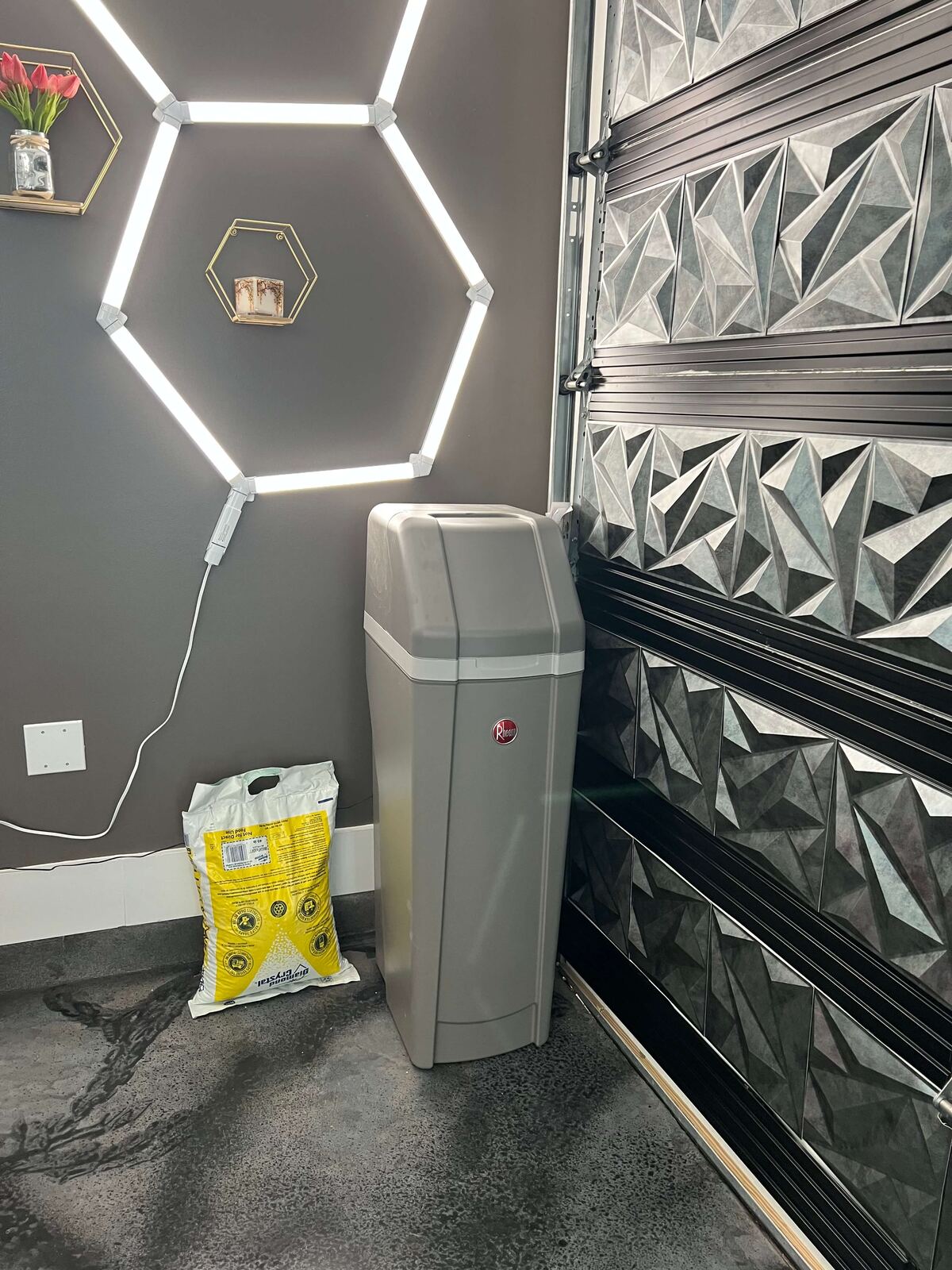
Where does it install? Typically the garage, utility room, or an outdoor enclosure where the main water supply enters the home.
How much maintenance? Refill the salt every 4–8 weeks depending on the system. Service every few years to check the valves and resin.
Should you also filter?
Many Houston homeowners pair a softener with whole-home carbon filtration. The softener handles hardness; the carbon filter handles chlorine, taste, and odors. Combined, they give you genuinely clean, soft, great-tasting water at every tap. Adding a reverse osmosis system at the kitchen sink covers drinking water.
Whether you need the full setup or just a softener depends on your priorities. We test your water first, then design the right system. No upsells, no generic packages.