Water Heaters
Why Your Hot Water Runs Out Too Fast (And How to Fix It)
If your hot water disappears two minutes into a shower, you’re not imagining it. Something has changed. Figuring out what changed — and which of the common causes is yours — is the difference between a $200 repair and a several-thousand-dollar replacement.
Here are the five most common reasons hot water runs out too fast.
1. Sediment buildup in the tank
In Houston, this is the #1 cause. Hard water deposits accumulate at the bottom of the tank over years. Eventually they:
- Take up enough volume to reduce effective tank capacity (you have less hot water than the label says)
- Insulate the burner or heating element from the water, slowing recovery
- Cause the popping/rumbling sound many people hear before they notice the capacity loss
Fix: A professional flush can sometimes restore lost capacity if the unit isn’t too far gone. On units older than 8 years with significant sediment, a flush helps short-term but the unit is approaching end of life.
2. Failed dip tube
The dip tube is a long plastic tube inside your water heater that directs cold incoming water down to the bottom of the tank. When it breaks or degrades, cold water gets dumped right at the top — mixing with the hot water that’s about to leave the tank. Result: lukewarm water that runs cold quickly.
This is a known failure pattern in water heaters from a specific era (mid-1990s), but newer units fail this way too occasionally.
Fix: Dip tube replacement is straightforward and affordable. We diagnose by checking outlet water temperature against the thermostat setting and looking for the characteristic “starts hot, goes cold fast” pattern.
3. Failed heating element (electric units)
Most electric water heaters have two heating elements — one in the upper half of the tank and one in the lower. If the lower element fails, the unit can only heat the upper half of the tank. You’ll get a small amount of hot water (the heated portion) and then it will run cold.
Fix: Heating element replacement is one of the more common repairs we do. Affordable, fast, and usually solves the problem cleanly.
4. Thermostat malfunction
If the thermostat is reading inaccurately or stuck, the unit may be running too cold or cycling incorrectly. You’ll get less hot water and/or inconsistent temperature.
Fix: Thermostat replacement. Diagnostic involves measuring water temperature at the outlet against the thermostat setting under load.
5. Undersized for actual demand
This is the one no repair can fix: the unit was sized correctly when installed, but household demand has changed. New family members, new appliances, longer showers, or a switch to a high-flow showerhead — all increase demand.
A 40-gallon unit that served two adults fine doesn’t serve a family of five with two teenagers in 15-minute showers. The unit isn’t broken; it’s outmatched.
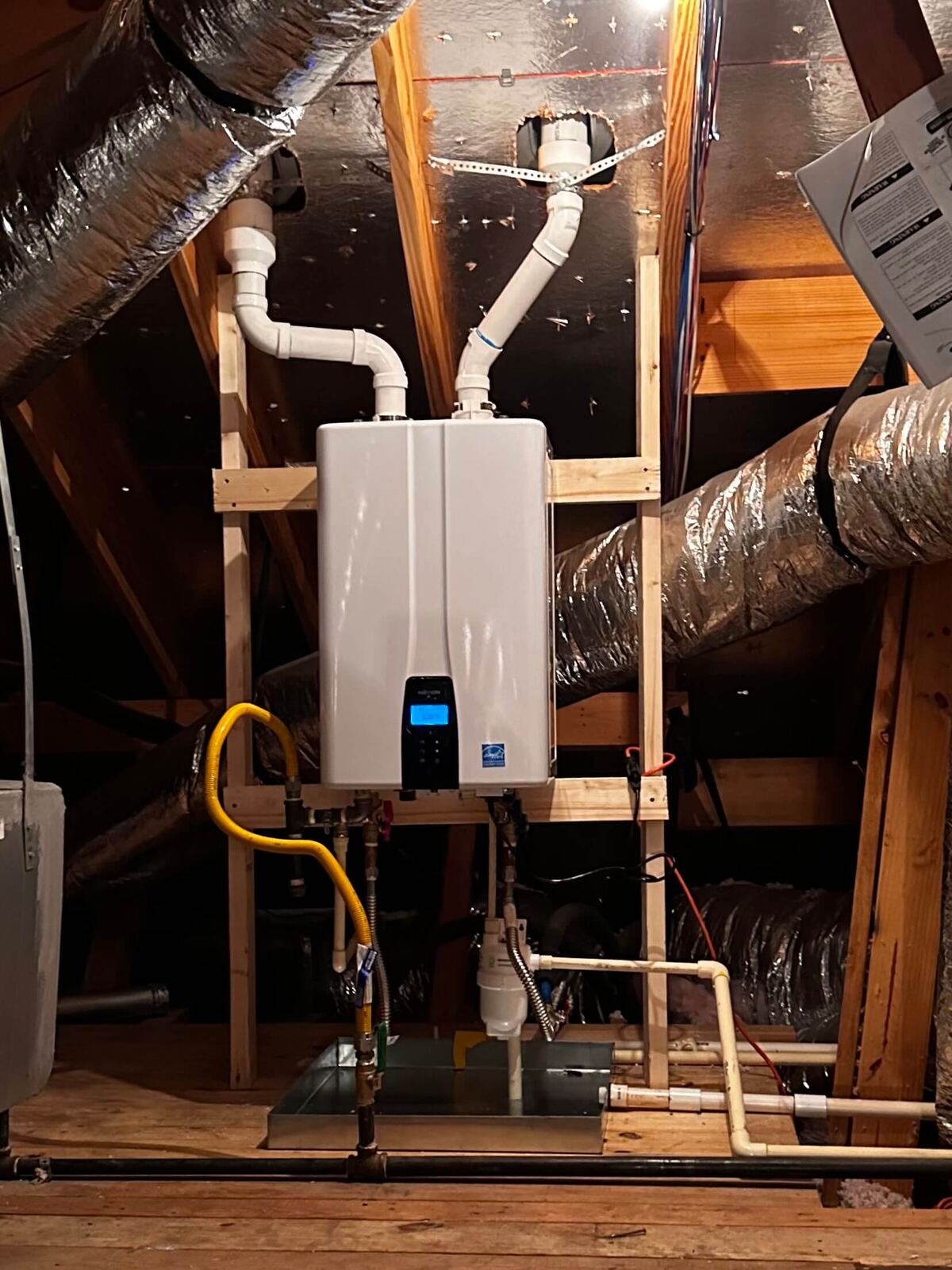
Fix: Either a larger tank or a tankless conversion. Tankless eliminates the capacity issue entirely (endless hot water). A larger tank — 75 or 80 gallons — solves it for less upfront cost but with higher operating costs and shorter life than tankless.
How we diagnose
When you call us about a hot water capacity issue, our process is:
- Check the age of the unit
- Test water temperature at multiple fixtures
- Look for sediment indicators (sound, drain bucket test)
- Test heating elements (if electric)
- Check thermostat function
- Compare household demand to tank capacity
Within 30–60 minutes we know which of the causes is yours, and we give you written options before any work begins.
When repair makes sense vs. replacement
Repair is the right call when: the unit is under 8–10 years old, the failure is a specific identifiable component (element, thermostat, dip tube), and the rest of the tank is in good condition.
Replacement is the right call when: the unit is over 10 years old and showing capacity loss, the tank has heavy sediment buildup, you’ve had multiple repairs already, or the unit is undersized for current household demand.
Tankless is worth considering when: you’ve been running out of hot water consistently regardless of unit size, multiple bathrooms are used simultaneously, or you want to reclaim the space and reduce energy bills.
Don’t put up with cold showers
Running out of hot water is the kind of problem that gets normalized — homeowners learn to take shorter showers, stagger family bathing schedules, run laundry at off-hours. None of that should be necessary. With the right diagnosis and either a repair or a properly sized replacement, you should get consistent hot water for the way your family actually lives.