
Gas Lines
Generator Gas Line Installation: What Homeowners Need to Know
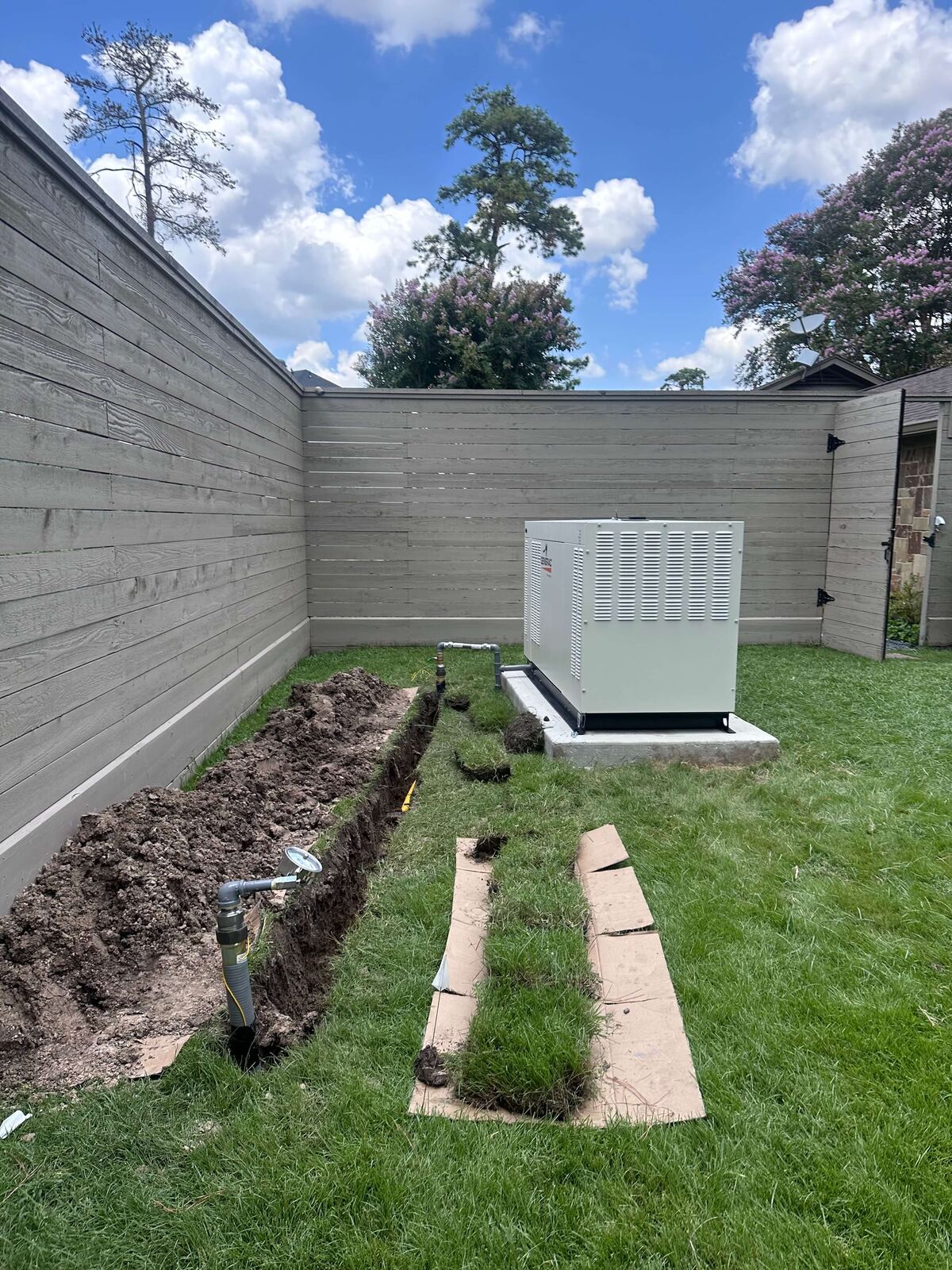
After hurricanes, ice storms, and grid failures, more Houston homeowners are installing standby generators than ever. The generator itself gets most of the attention — make, model, kW rating, transfer switch. The gas line that feeds it gets a lot less. That’s a mistake, because an undersized or poorly installed gas line means your generator won’t deliver full power when you actually need it.
Why generator gas lines are different
A typical home gas appliance — range, dryer, water heater — uses 30,000 to 80,000 BTU per hour. A standby generator at full load typically uses 250,000 to 400,000 BTU per hour. That’s an order of magnitude more demand, often more than the rest of the home’s gas appliances combined.
If your existing gas line can handle the generator load without starving your other appliances, you’re set. Often it can’t, and that requires:
- A larger line from the meter to the generator
- Sometimes a larger main supply line
- Sometimes a meter upgrade from the gas company
What proper sizing looks like
Sizing isn’t a guess. It’s a calculation based on:
- Total BTU demand — generator + all other gas appliances running simultaneously
- Line run length — pressure drops with distance, so longer runs need bigger pipe
- Number of fittings and turns — each elbow and tee adds friction loss
- Operating pressure — most residential gas is delivered at low pressure (around 7” water column), which limits how much flow a given pipe size can handle
A licensed plumber runs these numbers before quoting the job. If a contractor doesn’t ask about your existing appliances and run length, they’re not sizing — they’re guessing.
What about the meter?
The gas meter itself has a maximum flow rating. Many older Houston homes have meters too small for a standby generator’s demand. Common situation:
- Existing meter: 250 CFH (cubic feet per hour) capacity
- Existing appliance load: 220 CFH
- Generator demand: 320 CFH
- Total demand with generator running: 540 CFH — more than double the meter’s capacity
In this case, the gas company has to swap the meter for a larger one before the install can proceed. We coordinate this with your utility. It’s free in most cases, but it adds days to the project timeline.
Permits and inspections
Gas line work in Texas requires:
- A licensed master plumber doing the work
- A pulled permit
- A pressure test before the line is put in service
- An inspection by the local authority
This isn’t optional. Anyone offering to install a gas line without permits is exposing you to legal, insurance, and safety risk. We pull all required permits as part of every install.
Costs
Generator gas line installation costs vary widely based on:
- Distance from meter to generator location
- Whether the meter needs upgrading
- Whether the main line needs upsizing
- Pipe material (CSST is faster to install; black iron may be required in certain conditions)
- Permits and inspection fees
Most residential generator gas line installs we do are completed in 1–2 days of plumbing work, plus any meter upgrade time. We provide written estimates after a site visit.
Common pitfalls
Generator company doing the gas line. Most generator companies aren’t licensed plumbers. They handle the electrical side. Some sub the gas to a third party with mixed quality. Hiring a licensed plumber directly gets you a better-installed and properly permitted gas line.
Undersized line for “this generator’s specs.” Some installers size only for the generator without accounting for other appliances. Result: your generator runs but starves your water heater or range when it’s on.
Skipping the bonding on CSST. Corrugated stainless steel tubing must be properly bonded to protect against lightning-induced damage. Skipping this step has caused fires and code violations.
No accessible shut-off valve. A proper install includes an accessible shut-off valve near the generator for maintenance and emergencies.
Bottom line
A generator is an investment. The gas line is the part that determines whether your investment delivers on its promise. Don’t cut corners on it.